


Golden Zen Green Tea (Spring 2026)
114 in stock
$26.50
114 in stock
Spring 2026 Golden Zen Green Tea (sold as 50g bag)
1. Background, location, and origin story
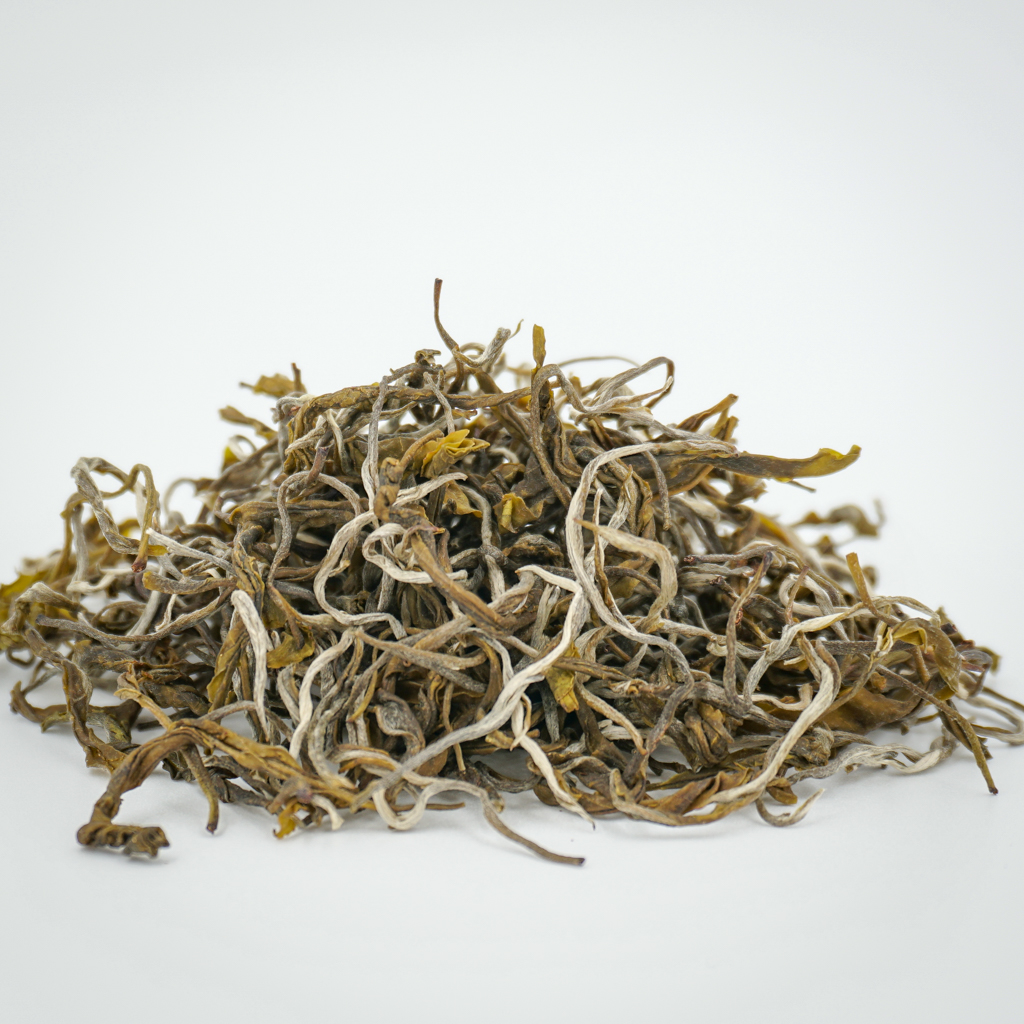
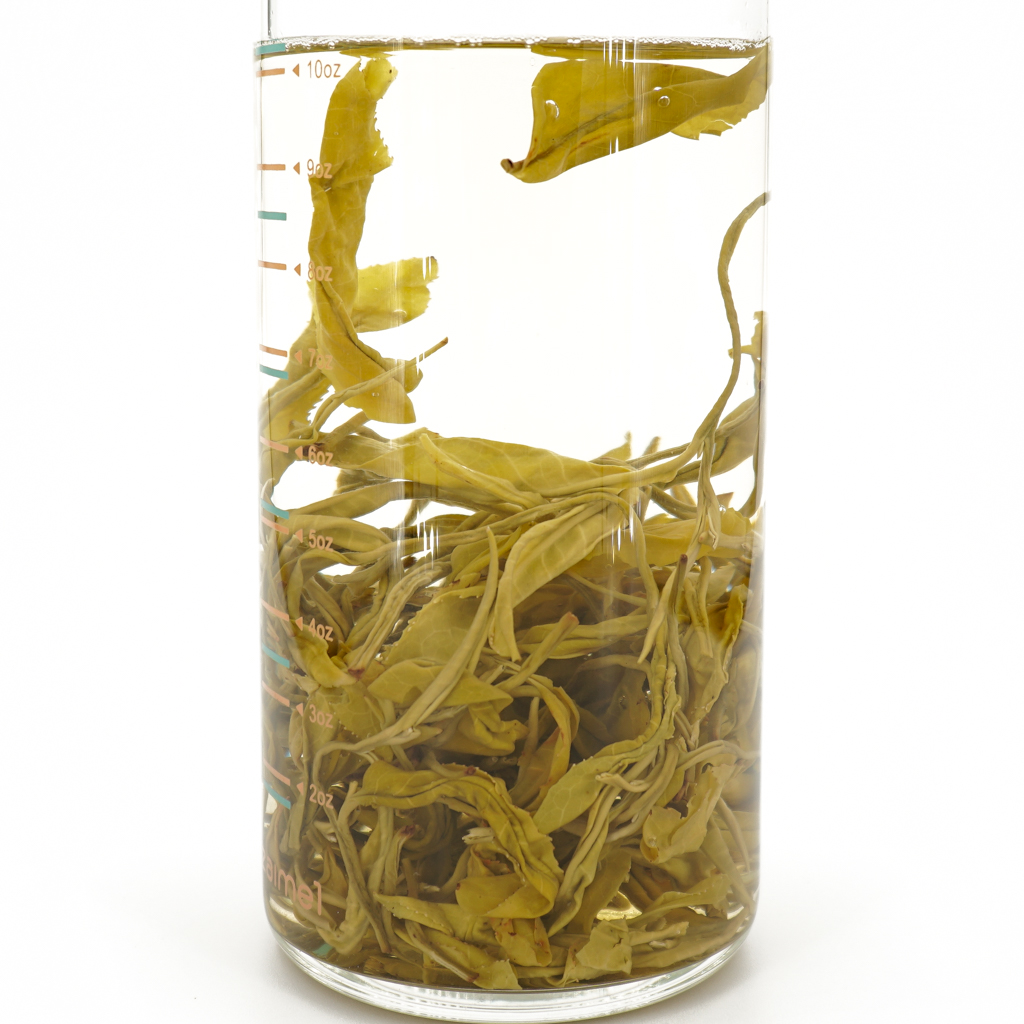
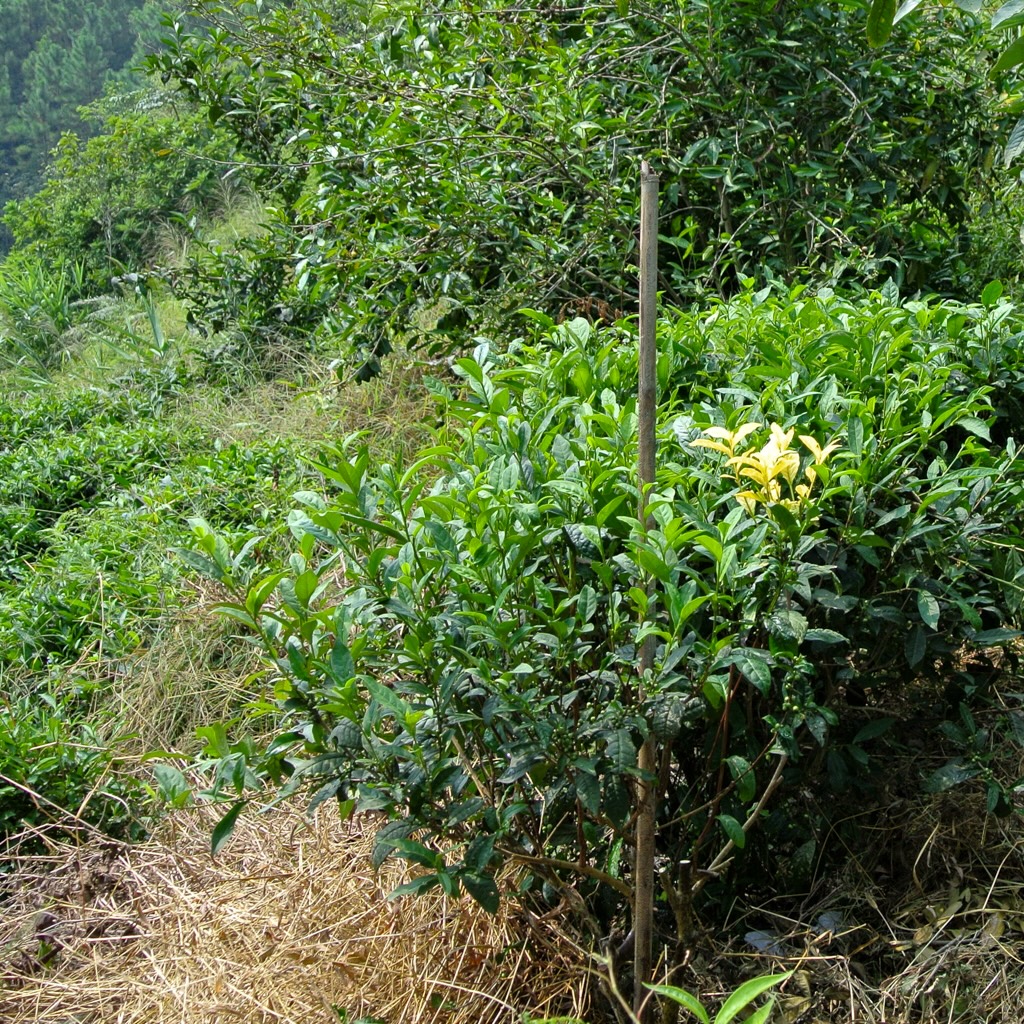
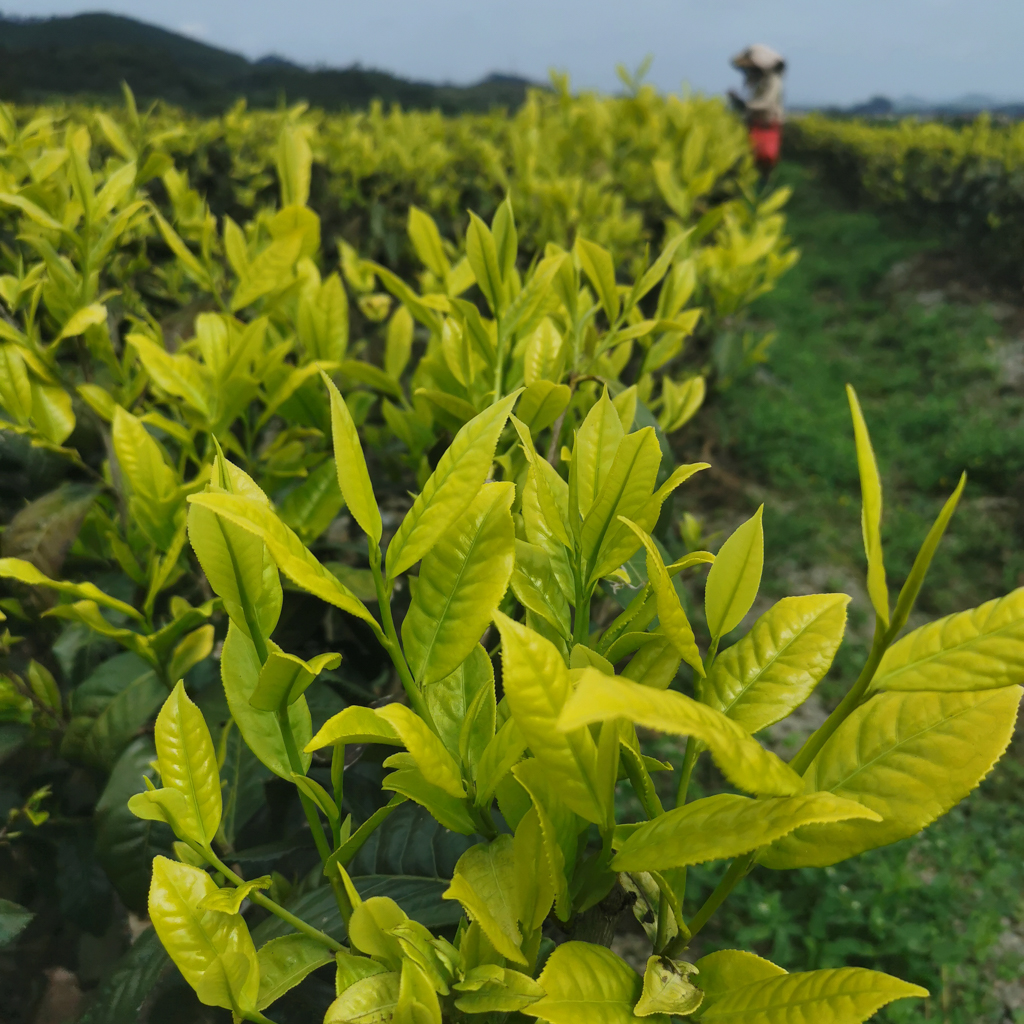
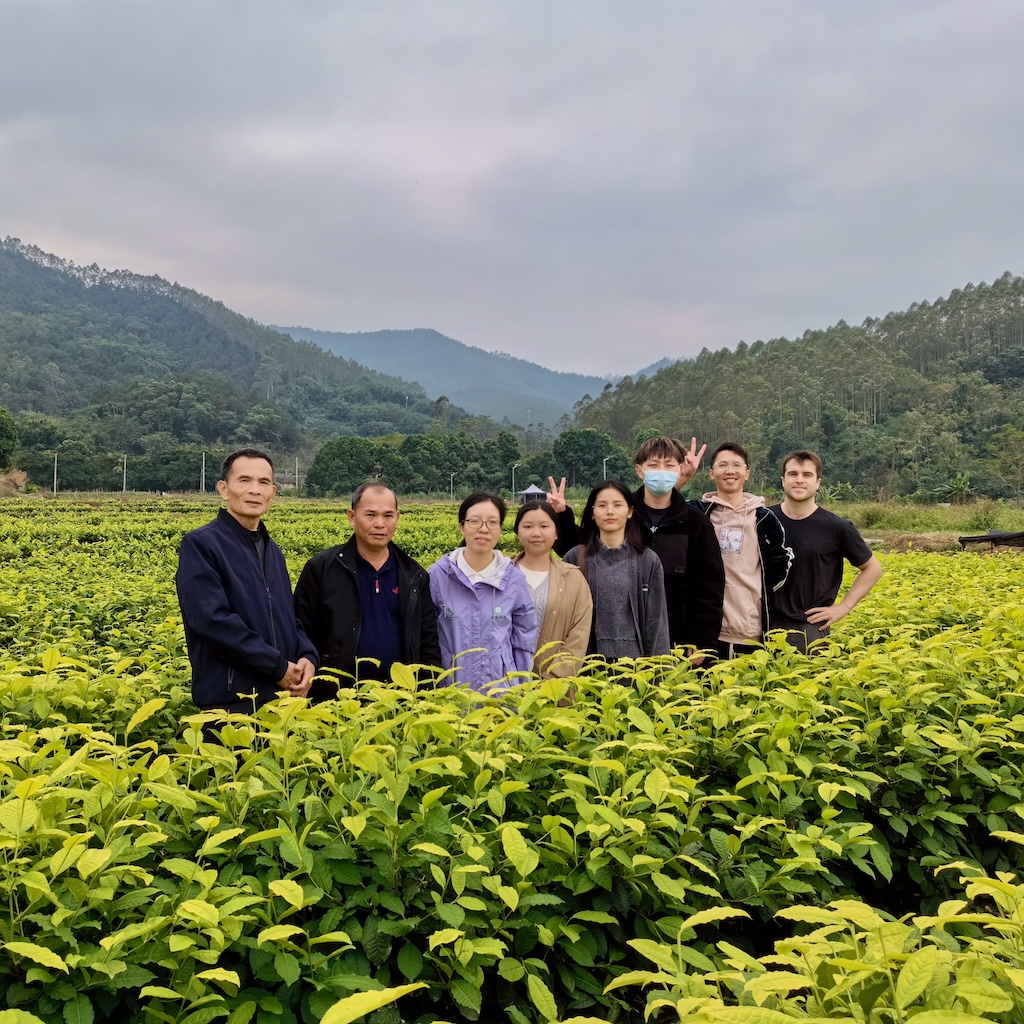
The newest addition to our Wu Mountain Exclusive list, Golden Zen Green Tea is a new tea variety selected from a Yunnan large-leaf tea population. Its breeding and testing were carried out by Wu Mountain Tea founder, Dylan O'Neill Rothenberg, and his team of colleagues in Xinxing County, Yunfu City, Guangdong Province (pictured above). The variety arose from a regional breeding effort to improve tea quality and enhance amino acid content without resorting to artificial additives or processing aids. Its name reflects its lightly golden-green leaf coloration and a philosophy of producing a naturally high-quality, high-amino-acid tea, aligning with the calm and balanced imagery of Zen. Compared with other common tea cultivars, Golden Zen Green Tea maintains stronger growth, dense branching, early budding, and a long growth cycle. Its unique pale yellow-green mature leaves make it stand out visually from conventional Yunnan large-leaf types.
2. Unique genetics and biochemistry
Golden Zen Green Tea was bred with an emphasis on high free amino acid content, especially theanine, which is closely associated with desirable green tea flavor. Its fresh leaf amino acid content reaches over 5%, qualifying it as a high-amino-acid resource. The genetic basis for this is complex, involving multiple genes and their interaction with environmental factors such as soil and light. Unlike many high-amino-acid tea cultivars that suffer from chlorosis or weakened stress resistance, Golden Zen Green Tea retains good photosynthetic capacity and resilience against light and cold stress. In biochemical assays, Golden Zen showed lower catechins linked with bitterness (like catechin and epicatechin) but higher levels of epigallocatechin (EGC) and its gallate (EGCG), which are associated with smoother taste and health benefits. It also shows relatively low caffeine accumulation in spring, further supporting a sweet, mellow flavor profile.
For an in-depth review of the key tea leaf compounds that create tea flavor, see Chapter 2 of the Masterclass on Tea
3. Processing of the leaves into green tea
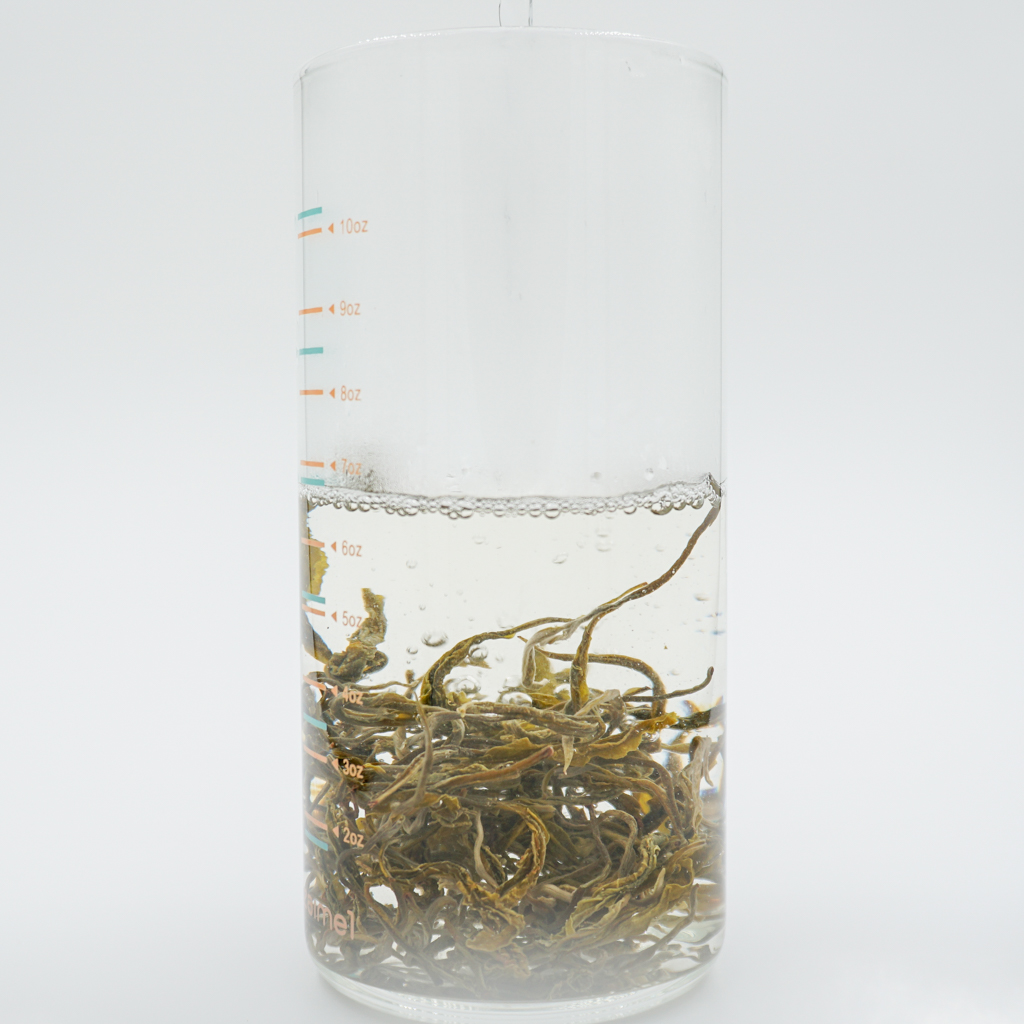
Golden Zen Green Tea can be processed into green, white, or black tea. However, based on multiple sensory and chemical tests, its suitability is best for green tea. For green tea processing, the leaves are picked as one bud with two leaves during spring, summer, and autumn harvests, then subjected to pan-fired fixation, or ‘kill-green’ to halt oxidation, rolled, shaped, and dried. Compared to conventional Yunnan cultivars, the processed leaves from Golden Zen maintain higher amino acid and flavonoid levels while showing moderate total polyphenol levels, a balance that helps deliver a mellow yet flavorful infusion with lower bitterness. Sensory evaluation repeatedly confirmed its sweet and fresh taste, especially in spring-harvested green teas.
For a review on green tea processing, see Chapter 3 of the Masterclass on Tea
4. Flavor profile
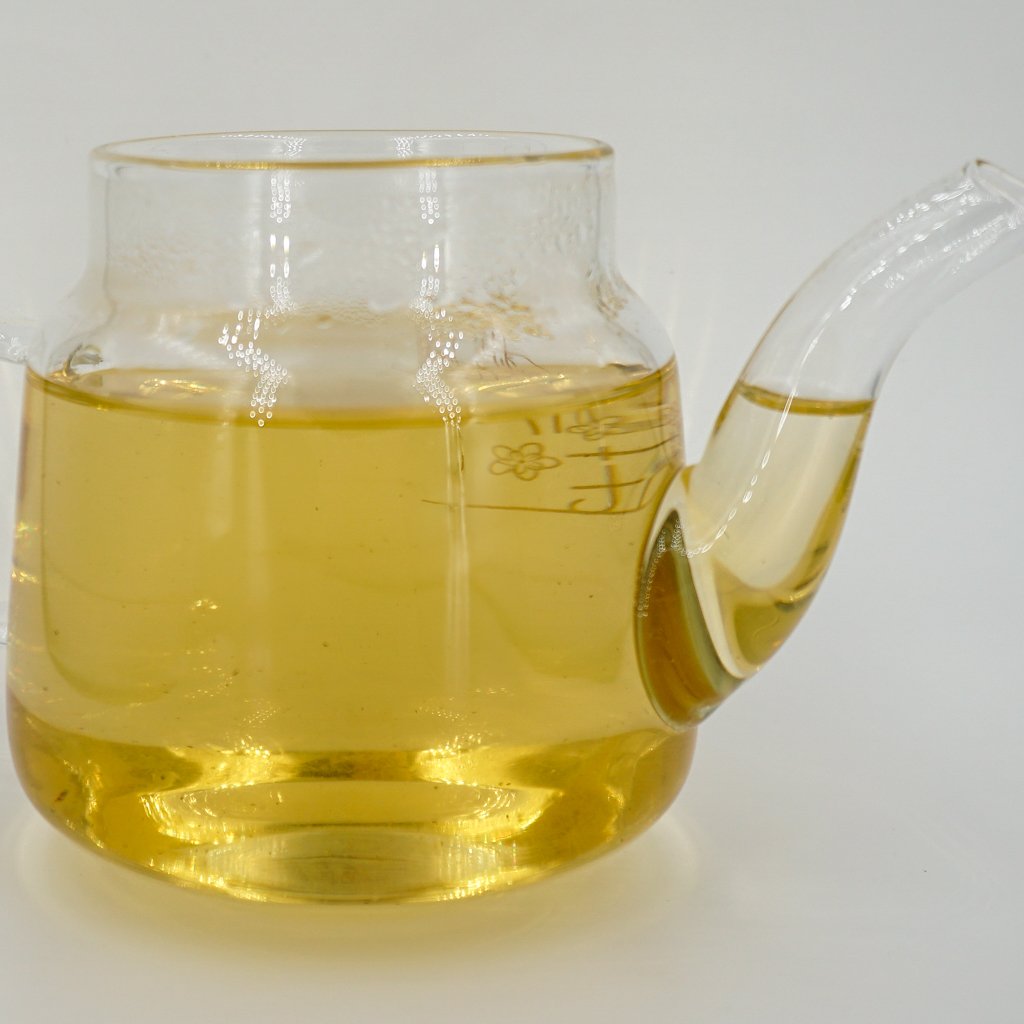
Golden Zen Green Tea delivers a clean, refreshing, and rounded taste. Its high theanine content gives the liquor a notable umami (savory-sweet) quality with a fresh, mellow character. Across seasonal harvests, its spring teas exhibit the most pronounced sweetness with minimal bitterness, a lingering chestnut-like aroma, and a light yellow-green liquor. Summer teas show a stronger, more robust flavor with a slight increase in bitterness and lower sweetness, while autumn teas balance fresh sweetness with a mellow aftertaste. Overall, its flavor is characterized by:
- Fresh sweetness
- Bold umami
- Chestnut or roasted notes in aroma, with notes of mango
- Reduced bitterness and astringency compared to many other green teas
For a review on green tea quality assessment, see Chapter 4 of the Masterclass on Tea
5. Recommended food pairings
Given its umami-sweet flavor with a chestnut-like aroma, Golden Zen Green Tea pairs beautifully with foods that complement or balance its mellow and refreshing qualities. Based on its profile, ideal pairings include:
- Light seafood, such as steamed fish or shrimp, whose subtle flavors harmonize with the tea’s umami.
- Mild cheeses, like brie or camembert, where the tea’s freshness can cut through the richness.
- Grilled white meats, such as chicken breast with minimal seasoning, to match its chestnut notes.
- Vegetable dishes, particularly steamed or lightly stir-fried green vegetables, which resonate with its natural vegetal freshness.
- Light pastries (scones, shortbread) to accentuate the tea’s sweet aftertaste.
Additional information
| Weight | 50 g |
|---|



Gabe (verified owner) –
The umami gods (?) have looked fondly upon this tea’s production. Wow. Move over Gyokuro, a new umami king is in town (sorry for the almost completely irrelevant comparison).
If you’re an umami lover, this is the quickest blind buy you should make this year.
This tea feels like it’s in a league of its own. Granted my experience is somewhat limited, I’ve still enjoyed the majority of well-known Chinese and Japanese greens. The dry leaf fragrance from the bag is one of the strongest I’ve ever experienced. While I know this isn’t typically worth focusing on, I couldn’t stop smelling it on my way to work before my first brew. The wet leaf aroma has such a potent umami/mallard fragrance I immediately thought barbecue sauce, dark grilled meats, and steamed asparagus. Don’t let this deter you if you’re not a fan of barbecue sauce. For me, this was only found in the hot wet leaves and it is among many other delicious notes. The tea aroma moves into a sweeter range. Without getting too detailed and hand-wavy, this tea’s flavor profile seems to exist in a complex spot among strong umami, beany, steamed asparagus and I’m sure other notes I’m missing. Bitterness and astringency are null.
If brewing western-style with a separable infusing vessel, I recommend smelling from underneath the bottom filtration area as I consistently find the fragrance to shift its focus much sweeter and different notes are highlighted across all tea types. I have not tried grandpa style with this tea yet.
Dylan and his team have done something very special with this cultivar, harvest, and process and I’m incredibly thankful to have experienced it on the other side of the globe. I hope they’re able to continue production of this tea and receive widespread recognition for it.
Mot –
I bought this variety, and the dragonwell. This one is by far my favorite. There is a complexity of flavors in it, but the note that stands out to me the most is the hint of salted, pan fried steak. That is probably weird, but I find it absolutely wonderful. Drinking it is like a bit of euphoria. These teas are far and above better than anything you can get at your local grocery store. I’ll definetly be trying other vareities when the budget permits!